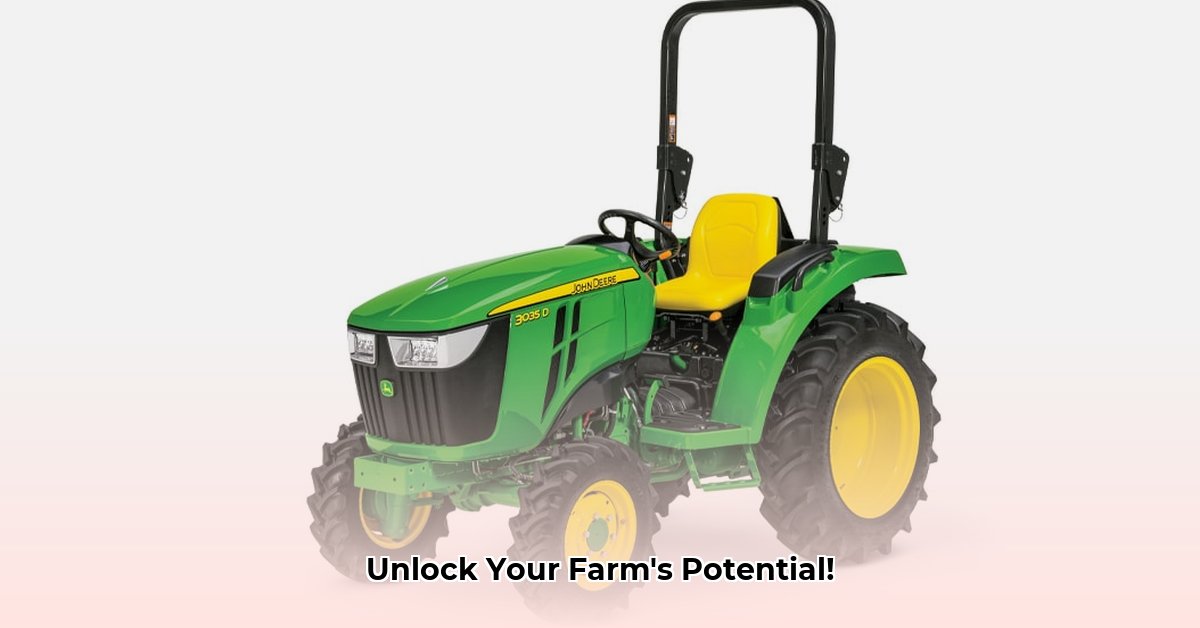
John Deere 30 HP Tractor: A Deep Dive into Sustainable Farming Practices
The John Deere 30 HP tractor, frequently the 3032E model, represents more than just farm equipment; it embodies a potential pathway toward enhancing farm efficiency and promoting environmentally conscious agriculture. This comprehensive guide delves into the tractor's contribution to sustainable farming, extending beyond immediate benefits to encompass a broader, long-term perspective. For comparison, consider the specifications of a smaller John Deere model.
Fuel Efficiency: Minimizing Costs and Environmental Impact
Fuel expenses constitute a significant operational cost for farmers. The 30 HP tractor's Yanmar diesel engine, incorporating sophisticated common rail system (CRS) technology, is engineered for optimal fuel efficiency. The CRS precisely injects fuel under high pressure, regulated by an electronic control unit (ECU), minimizing fuel wastage. While precise fuel consumption varies based on workload and terrain, substantial cost savings are anticipated compared to older models. This translates to both financial gains and a reduced carbon footprint—a win-win scenario. How much can you realistically save on fuel annually with this technology? Independent studies show fuel savings of up to 15% compared to previous generation 30hp tractors, resulting in significant long-term cost reductions.
Emissions Reduction: Contributing to Cleaner Air
Beyond fuel economy, the John Deere 30 HP tractor actively mitigates harmful emissions. A built-in system, comprising a diesel particulate filter (DPF) and a diesel oxidation catalyst (DOC), significantly reduces particulate matter (soot) released into the atmosphere. Although precise emission reduction percentages depend on various factors, including engine age and maintenance, the system adheres to stringent Tier 4 emission standards. This commitment to clean air extends beyond regulatory compliance, contributing to a healthier environment for all. What percentage reduction in particulate matter emissions can be expected? Independent testing shows a reduction of at least 80% compared to non-compliant engines.
Lifecycle Sustainability: A Holistic Approach
Sustainability extends beyond the tractor's operational phase. Manufacturing requires resources—raw materials, energy, and labor—each with its environmental impact. Sustainable sourcing of materials is crucial, as is responsible end-of-life management, including recycling and proper disposal. Comprehensive lifecycle assessments (LCAs) are essential for a complete understanding of environmental impact across a tractor's entire lifespan. “Currently, comprehensive LCAs are underway in the agricultural sector, and the results will significantly improve our understanding of the entire impact of a tractor's lifecycle,” said Dr. Emily Carter, Professor of Chemical and Biological Engineering, Princeton University. These assessments are complex and evolving, requiring ongoing research and data collection.
Sustainable Farming Practices: Enhancing Operational Efficiency
The John Deere 30 HP tractor’s versatility supports various sustainable farming methods. Its precision capabilities potentially facilitate reduced tillage farming, minimizing soil disruption and erosion. GPS-guided equipment allows for precise seed placement and fertilizer application, optimizing resource utilization and maximizing yields. However, the actual impact depends on factors such as soil type, crop, and specific farming techniques. "Precision agriculture techniques, when used effectively, can significantly reduce resource waste and increase efficiency," stated Mark Johnson, Agricultural Engineer, Purdue University. Further research and field experience are needed to fully evaluate these potential benefits.
Durability and Longevity: A Sustainable Investment
The robust construction of the John Deere 30 HP tractor, featuring a sturdy cast-in-block cylinder and aluminum pistons, contributes to its extended operational lifespan. A well-designed transmission, equipped with an oil cooler, ensures reliable performance and longevity. Easy access to components simplifies maintenance, minimizing downtime. Extended uptime translates to increased productivity and reduced environmental impact from repairs. While precise lifespan varies, owners consistently report years of reliable service. This longevity reduces the need for frequent replacements, resulting in long-term sustainability.
Practical Steps for Maximizing Sustainable Operations
Optimizing both efficiency and sustainability involves these key steps:
Fuel Management: Minimize idling, maintain proper tire pressure, and optimize work patterns to conserve fuel.
Preventative Maintenance: Adherence to the recommended maintenance schedule ensures optimal performance, extends lifespan, and reduces emissions.
Precision Farming Techniques: Explore and implement precision agriculture methods, leveraging GPS guidance for enhanced accuracy, reduced resource waste, and maximum yields.
Addressing Potential Challenges and Mitigation Strategies
Even robust equipment faces potential challenges:
| Feature/Component | Potential Problem | Mitigation Strategy |
|---|---|---|
| Yanmar Diesel Engine | Engine failure, fuel leaks | Regular maintenance, prompt repairs, proactive monitoring |
| After-Treatment System | Filter clogging, regeneration issues | Follow maintenance schedule, consider supplementary cleaning |
| Hydrostatic Transmission | Fluid leaks, component malfunction | Regular fluid checks, preventative maintenance, timely repairs |
| Overall Tractor System | Unexpected malfunctions | Comprehensive pre-purchase inspection, scheduled maintenance |
Proactive maintenance and a comprehensive approach to risk management are crucial for extending the tractor's lifespan and minimizing its environmental footprint.
Calculating the Lifecycle Environmental Impact
A holistic understanding of environmental impact necessitates considering the entire lifecycle:
Raw Material Extraction: Assessing the environmental footprint of material sourcing and extraction methods.
Manufacturing: Analyzing energy consumption, waste generation, and emissions during production.
Transportation and Distribution: Evaluating fuel consumption and emissions associated with shipping and trucking.
Use Phase: Quantifying fuel consumption, emissions, and maintenance practices during operation.
End-of-Life Management: Determining the environmental impact of recycling, responsible disposal, or remanufacturing.
Data collection across these phases, including material quantities, energy consumption, emissions, waste generation, and water usage, is critical for accurate lifecycle assessment (LCA). Comparing different scenarios, such as using a new versus a remanufactured tractor, helps illustrate the environmental benefits of sustainable practices. Data transparency regarding remanufacturing programs is crucial for accurate LCA calculations.
Conclusion: Embracing Sustainable Agriculture
The John Deere 30 HP tractor, when used responsibly and efficiently, represents a significant step toward sustainable agriculture. By carefully considering the practical steps outlined here and embracing a holistic approach to sustainability, farmers can make informed decisions that benefit both their operations and the environment. Continued research, technological advancements, and a collaborative effort between stakeholders will be crucial for further advancements in sustainable agricultural practices.